
The Theme of Freedom and Slavery
The FallExplores how the novel interrogates the concepts of freedom and slavery, culminating in Clamence's advocacy of submission.
increasing Bearing strength in each event
 decreasing
Bearing strength in each eventdecreasingThe Rhetoric of Freedom
A word of power
Freedom as a weapon
Clamence used the word freedom to bludgeon his opponents. He believed in it, but it was a rhetorical tool. He didn't understand its weight.
The disinterested use
He defended freedom a few times, but not to the point of death. He was a fair-weather friend of liberty. The theme was present but not yet explored.
The Fear of Freedom
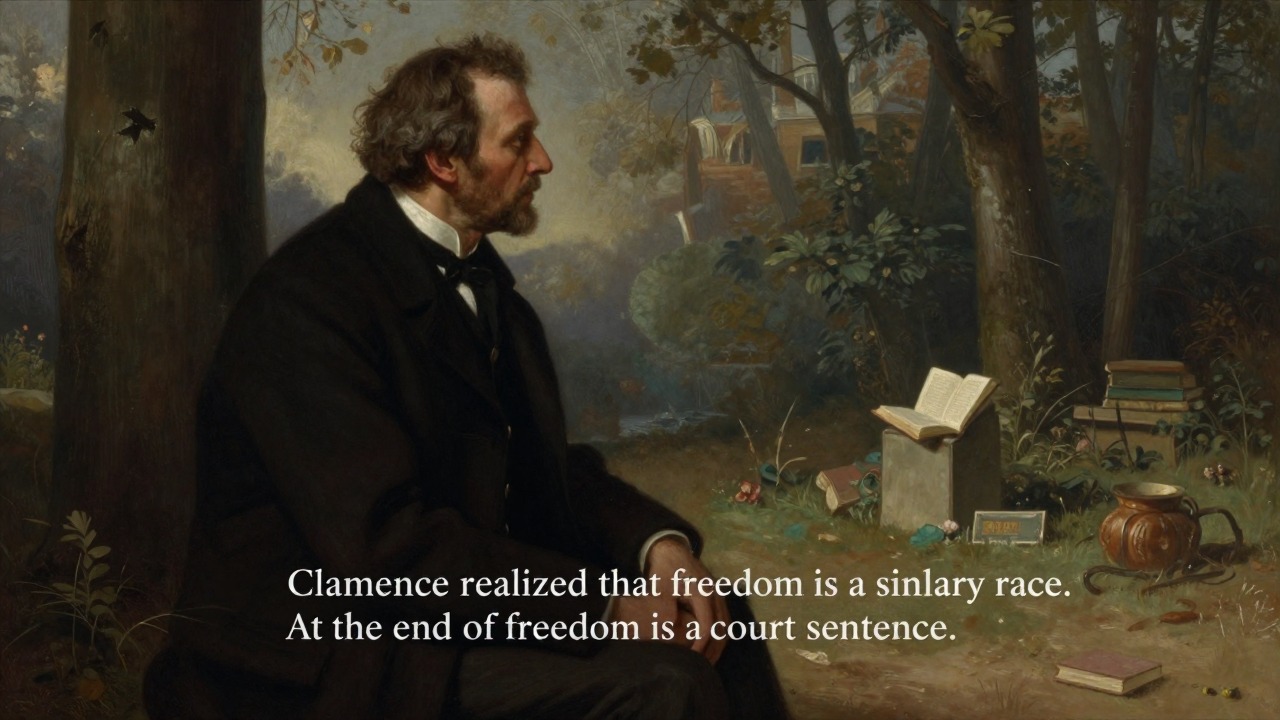
The burden of liberty
Alone and judged
Clamence realized that freedom is a solitary race. At the end of freedom is a court sentence. He was afraid of it. He didn't want to be free.
The desire for a master
He argued that one must choose a master, since God is out of style. He wanted to be commanded. The theme of freedom begins to shift toward slavery.
The Advocate of Slavery
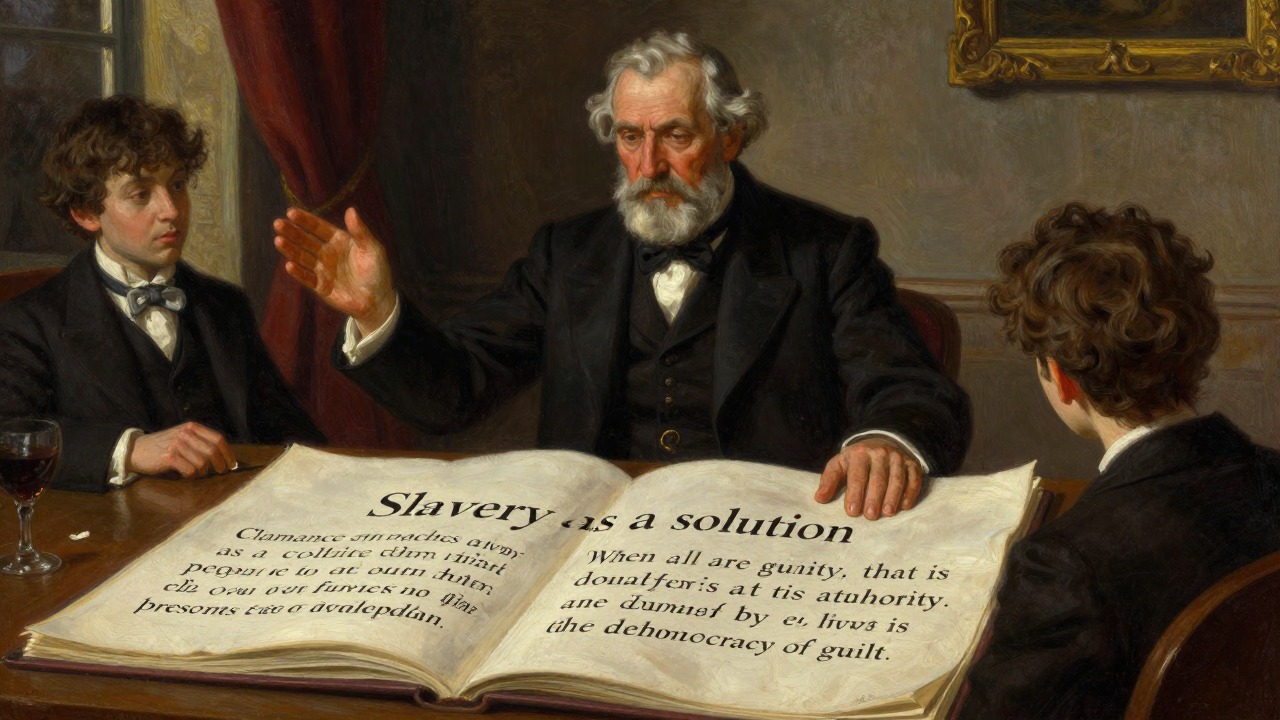
The new doctrine
Slavery as a solution
Clamence preaches slavery as a collective comfort. He invites people to submit to authority. He presents it as true freedom. The theme is now fully developed.
The democracy of guilt
When all are guilty, that is democracy. Slavery is collective. He has become an enlightened advocate of slavery. The novel's theme of freedom is inverted into its opposite.
Clamence's early life and career
After his fall, during his self-examination
In his judge-penitent role
